Between “San Nicolás Tolentino” and the Jaguar. A Cult to the Rain in Zitlala, Guerrero
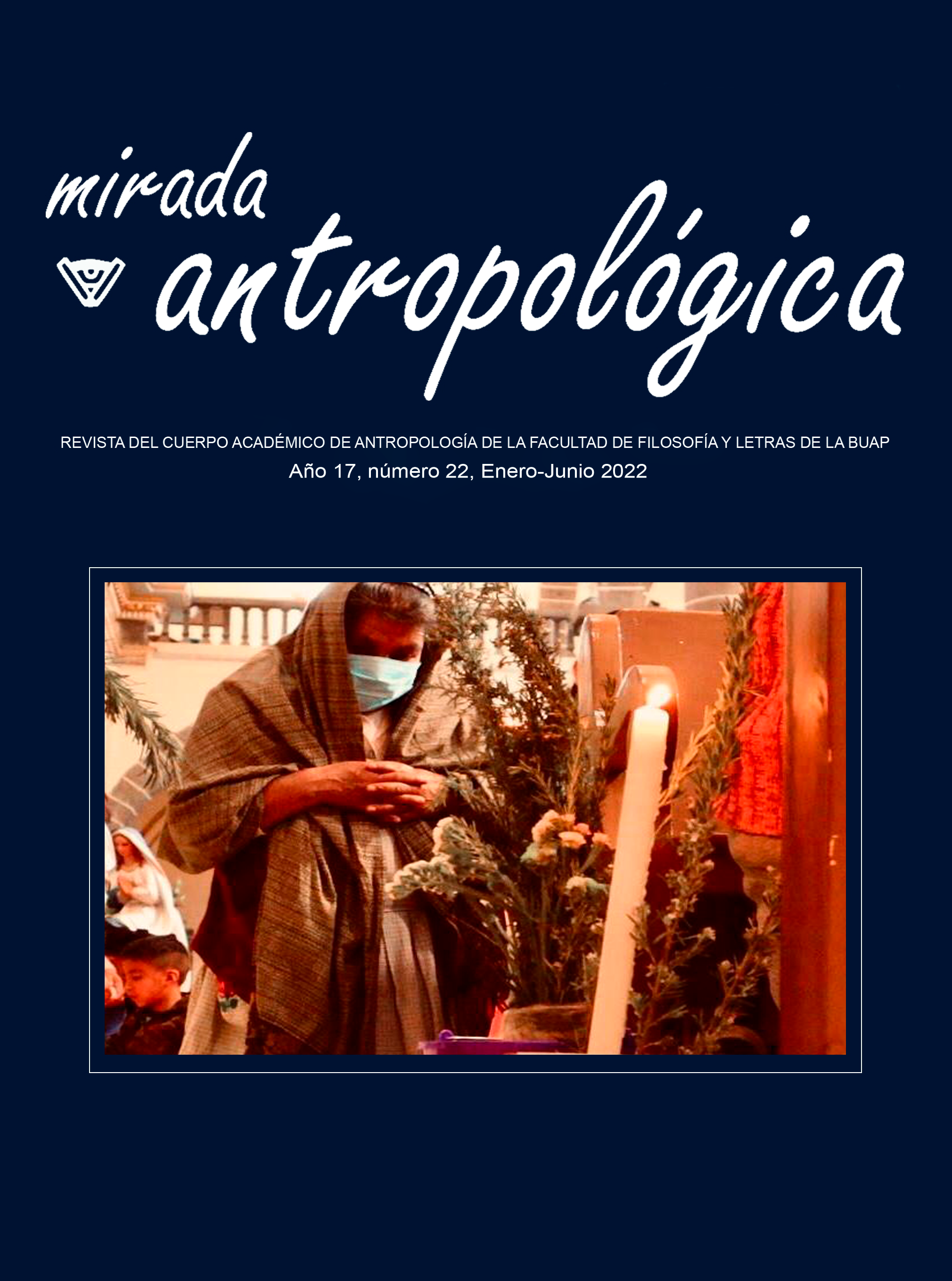
Published 2022-01-05
Keywords
- Devotion,
- Acculturation,
- Ritual,
- Ethos
Copyright (c) 2022 Los derechos morales pertenecen al autor. Los derechos patrimoniales pertenecen a la Benemérita Universidad Autónoma de Puebla

This work is licensed under a Creative Commons Attribution-NonCommercial-NoDerivatives 4.0 International License.
How to Cite
Abstract
The first Christian novohispanic worshiping were intimate associate to the natives and ancestral gods distinctive from the nahuas, otomies, mayans, mixtecs ethnic groups which religious diversity and thus the cult to the nature’s forces, they managed to blend their deities along with the occidental saints. It was a long and slow religious assimilation process, whose most of the people in “Zitlala” (place of stars), embraced their own way to reinterpret a religious catholic system, such as the system impose in the middle of the sixteenth century, it started off with the evangelization labor of the augustinian friars “Jerónima de San Esteban” and “Agustin de la Coruña”, in Zitlala, Chilapa and Tlapa, towns whose nowadays are found in the high and low part of the mountain region in the state of Guerrero. Subsequently to this process in Zitlala, starts a very particular cult to “San Nicolás Tolentino” town’s main saint, which them worship, nonetheless sharing this cult with the already worshiped jaguar, through the connection of the mesoamerican men and the nature surrounding them which interpret and comprehend. Despite of the sudden changes because of the covid-19 pandemic the Zitlala township proceed to assembly in honor to this cult which is significant to their day to day.
Downloads
References
- Acuña, R. (1985). Relaciones geográficas del siglo XVI: Tlaxcala, Tomo I y II. México: IIA-UNAM.
- Báez-Jorge, F. (2008). Entre los naguales y los santos. México: Universidad Veracruzana.
- Broda, J. (2009). Religiosidad popular y cosmovisiones indígenas en la historia de México. México: INAH.
- Dehouve, D. (2007). La ofrenda sacrificial entre los tlapanecos de Guerrero. México: Centro de estudios mexicanos y centroamericanos, Universidad Autónoma de Guerrero, Plaza y Valdés.
- Duch, L. (1998). Mito, interpretación y cultura. México: Herder.
- Duran, D. (2002). Historia de las indias de Nueva España e islas de tierra firme. Tomo II. México: Cien de México/CONACULTA.
- Eliade, M. (2009). El chamanismo y las técnicas arcaicas del éxtasis. México: FCE.
- _______. (1999). Historia de las creencias y las ideas religiosas I. la edad de piedra y los misterios de Eleusis. Barcelona: Paidós.
- _______ . (1992). Mito y realidad. Barcelona: Editorial Labor.
- Geertz, C. (1991). La interpretación de las culturas. México: Gedisa.
- Grijalva, J. (1985). Crónica de la orden de N. P. S. Agustín en las provincias de la Nueva España. México: Porrúa.
- López Austin, A. (2004). Cuerpo humano e ideología. Las concepciones de los antiguos nahuas Tomos I y II. México: IIA-UNAM.
- Malinowski, B. (1982). Magia, ciencia, religión. Barcelona: Ariel.
- Morin, E. (2006). El método. El conocimiento del conocimiento, Vol. 6. Madrid: Cátedra.
- Otto, R. (2008). Lo santo. Lo racional y lo irracional en la idea de Dios. México: Alianza Editorial.
- Sahagún, B. (2002). Historia general de las cosas de Nueva España. Tomo 1, 2 y 3. México: Cien de México/CONACULTA.
- Torquemada, J. (1986). Monarquía Indiana. México: Porrúa. Turner, V. (1988). El proceso ritual. Estructura y antiestructura. Madrid: Taurus.