Published 2020-07-27
Keywords
- Youth,
- Violence,
- Resistance,
- Urban Art
Copyright (c) 2020 Los derechos morales pertenecen al autor. Los derechos patrimoniales pertenecen a la Benemérita Universidad Autónoma de Puebla

This work is licensed under a Creative Commons Attribution-NonCommercial-NoDerivatives 4.0 International License.
How to Cite
Abstract
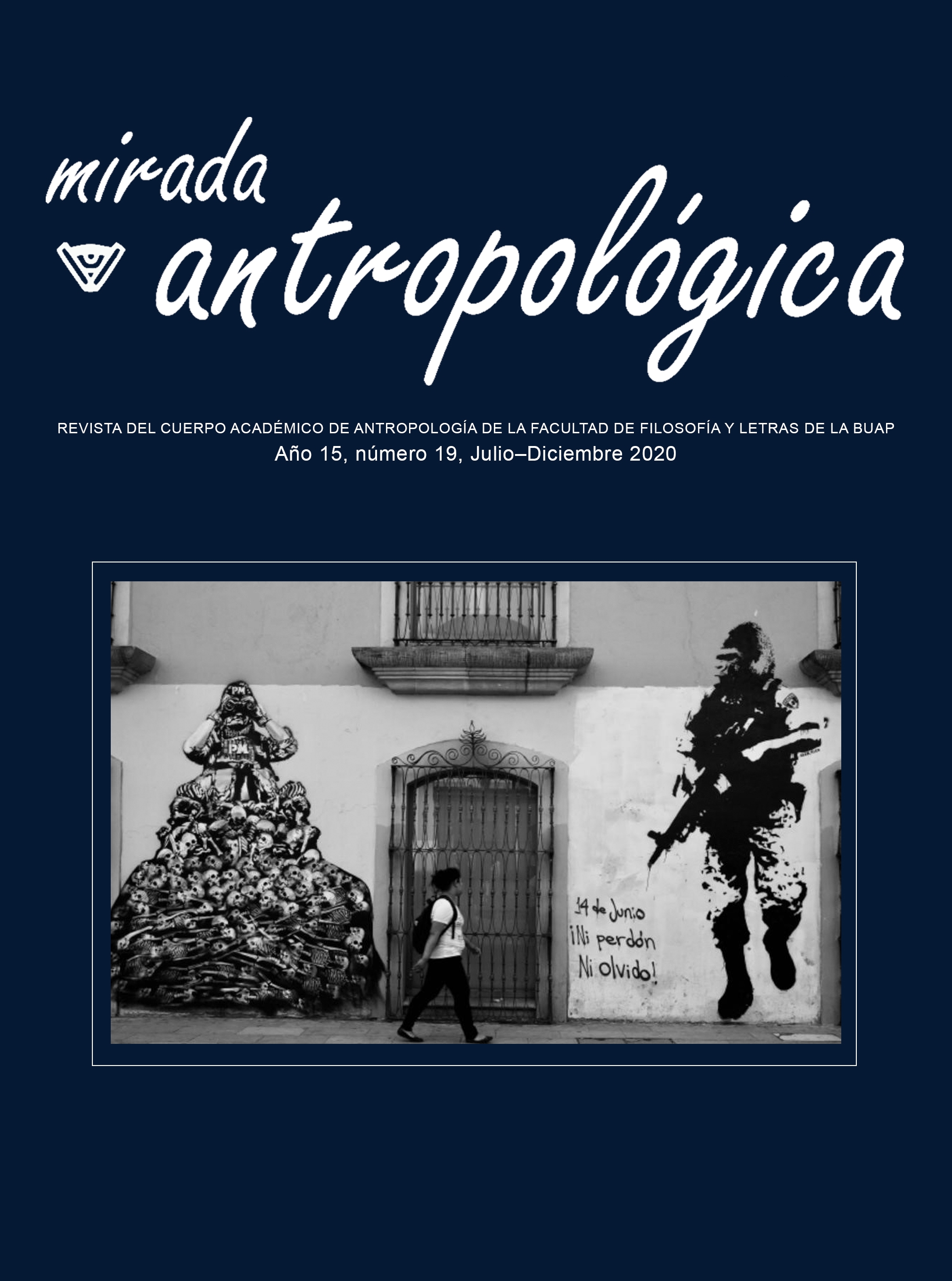
This work seeks to give an account on the actions and practices within a group of youths from Ciudad Juárez, called Circolectivo, intended to resist the onslaught of the violence specific to their border and everyday context, as well as certain displays of power received on them due to their role as young urban artists. This research presents their resistance alternatives, their own experiences with violent events, and their decisions as to how to tackle a hostile environment. All based on testimonies, perceptions about artistic activity as a resource, and the negative actions they identified coming from the system.
Downloads
References
- Alpízar, L. y M. Bernal (2003). La construcción social de las juventudes. Última década, (19), pp. 1-20.
- Baeza, J. (2003). Culturas juveniles: un acercamiento bibliográfico. Revista Medellín, vol. XXIX, (113), pp. 7-39.
- Bobel, C. y Kwan, S. (Eds.). (2011). Embodied resistance. Nashville: Vanderbilt University Press.
- Bourdieu, P. (1977). Symbolic power. En D. Gleeson (Ed.). Identity and structure: Issues in the sociology of education (pp.112-117). Driffield: Nafferton Books.
- Cervera, L. y Monárrez, J. (2013). Geografía de la violencia en Ciudad Juárez, Chihuahua. Tijuana: COLEF.
- Concha-Eastman, A. (2002). Urban violence in Latin America and the Caribbean: dimensions, explanations, actions. En S. Rotker (Ed.). Citizens of fear (pp. 37-55). Nueva Jersey: Rutgers University Press.
- Cruz, S. (Ed.). (2013). Vida, muerte y resistencia en Ciudad Juárez. Una aproximación desde la violencia, el género y la cultura. Tijuana: COLEF.
- Farmer, P. (2004). An anthropology of structural violence. Current anthropology, vol. 45, (3) pp. 305-325. Foucault, M. (2012). El poder, una bestia magnífica: sobre el poder, la prisión y la vida. México: Siglo XXI.
- Galtung, J. (1990). Cultural Violence. Journal of Peace Research, vol. 27, (3), pp. 291-305.
- Gramsci, A. (1975). Quaderni del carcere. Turín: Einaudi Editore.
- Guillen, L. (1995). Idea, concepto y significado de la juventud. Revista de Estudios sobre la Juventud, (1), pp. 39-49.
- La Parra, D. y Tortosa, J. M. (2003). Violencia estructural: una ilustración del concepto. Documentación Social. (131), pp. 57-72.
- Margulis, M. (2001). Juventud, una aproximación conceptual. En S. Donas (Ed.). Adolescencia y juventud en América Latina (pp. 41-56). Cartago: Libro Universitario Regional.
- Melucci, A. (1996). Challenging codes. Collective action in the information age. Nueva York: Cambridge University Press.
- Murillo, C. (8 de abril de 2013). Anartistas de Juárez. Carmugo sociologo. http://carmugosociologico.blogspot.com/2013/04/anartistas-de-juarez_8.html
- Olavarría, J. (2005). La masculinidad y los jóvenes adolescentes. Docencia, (27), pp. 46-55.
- Pardo, R. (2012). La novela negra de la frontera: violencia y subversión. Mitologías Hoy, (6), pp. 9-17.
- Pérez, J. (2006). Trazos para un mapa de la investigación sobre juventud en América Latina. Papers, (79), pp. 145-170.
- Reguillo, R. (2000). Emergencia de cul-turas juveniles: estrategias del des-encanto. Vol. 3. México: Editorial Norma.
- _____ (2000). Las culturas juveniles, un campo de estudio; breve agenda para la discusión. En G. Medina (Comp.), Aproximaciones a la diversidad juvenil (pp. 19-44). México: El Cole-gio de México.
- _____ (2008). Las múltiples fronteras de la violencia: jóvenes latinoamericanos entre la precarización y el desencanto. Pensamiento Iberoamericano, (3), pp. 205-225.
- Valenzuela, J. (1997). Culturas juveniles, identidades transitorias. Jóvenes, Revista de estudios sobre juventud, (3), pp. 12-35.
- _____ (2009), El futuro ya fue: socioantropología de los jóvenes en la modernidad. Tijuana: El Colegio de la Frontera Norte.
- Žižek, S. (2009). Sobre la violencia. Seis reflexiones marginales. México: Paidós.