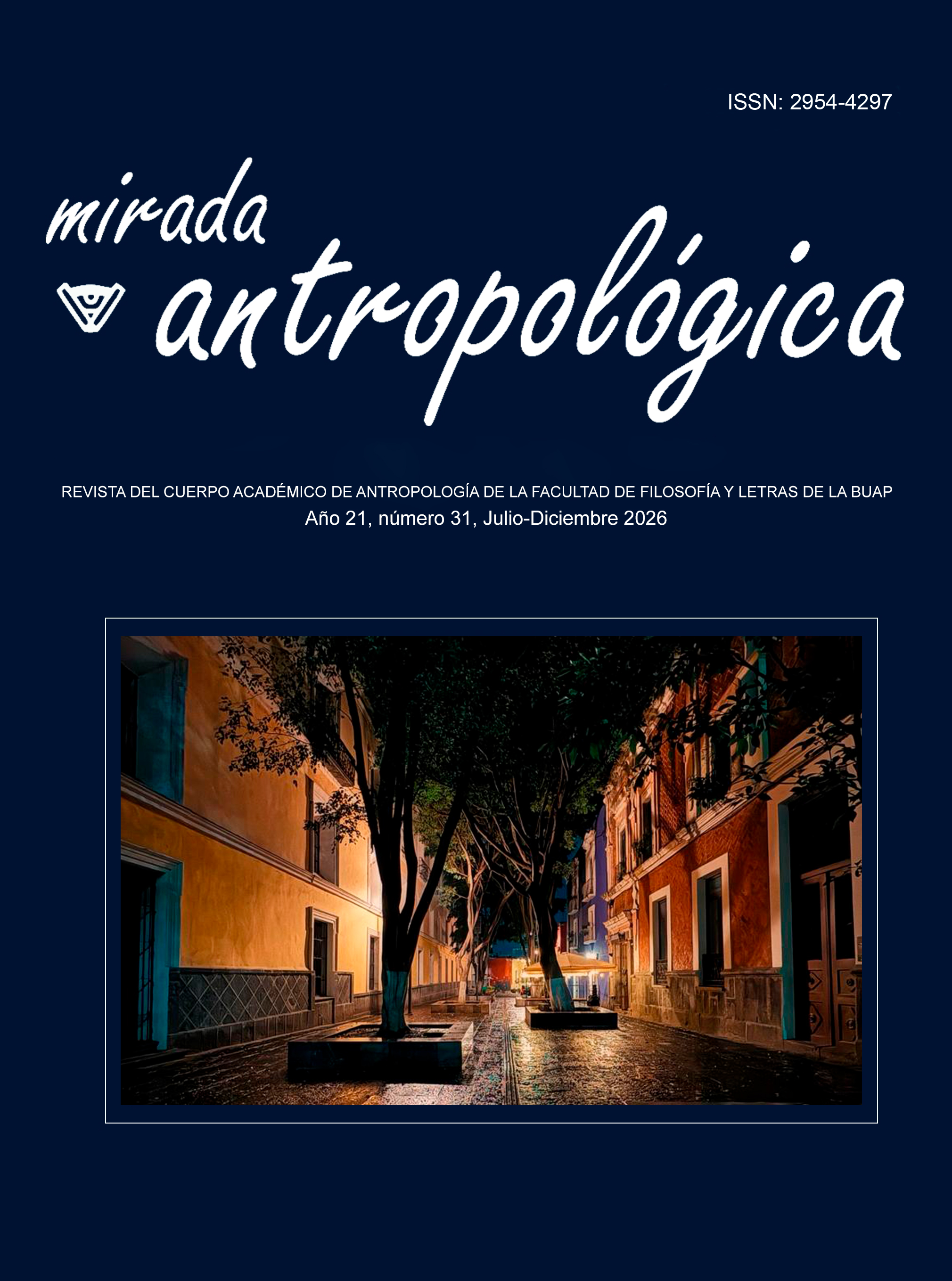
Published 2026-07-01
Keywords
- Urban Night,
- Darkness,
- Urban Redesign,
- Phenomenology

This work is licensed under a Creative Commons Attribution-NonCommercial-NoDerivatives 4.0 International License.
How to Cite
Abstract
The text proposes a phenomenological approach to night and darkness as key tools for rethinking the contemporary city, challenging the dominance of lighting in the urban order that renders experiences in the twilight invisible. It highlights the relevance of night to Urban Studies by visualizing it as a time-space with its own dynamics that transform social practices, perceptions, and uses of space. It analyzes darkness through the works of authors such as Brayan Palmer (2000) and Jun’ichirō Tanizaki (2015), among others, understanding it as a cultural and material construction and presenting it as a realm of transgression, control, and resistance. Finally, the paper highlights its aesthetic and design potential for urban redesign, opening interdisciplinary possibilities for imagining cities that are more complex, inclusive, and sensitive to the nocturnal experience.
Downloads
References
- Browne, S. (2015). Dark Matters: On the Surveillance of Blackness. Duke University Press.
- Edensor, T. (2013). Reconnecting with Darkness: Gloomy Landscapes, Lightless Places. Social & Cultural Geography, 14 (4), 446–465.
- Edensor, T. (2015). The Gloomy City: Rethinking the Relationship between Light and Dark. Urban Studies 52 (3), 422–438.
- Galinier, J., Becquelin, A. M. et al. (2010). Anthropology of the Night: Cross-Disciplinary Investigations. Current Anthropology 51 (6). 819–847.
- Hernández González, E. y Guérin, F. (2016). La experiencia de la caminata urbana durante la noche. Alteridades 26 (52), 35–50.
- Ingold, T. (2000). The perception of the environment: Essays on livelihood, dwelling and skill. Routledge.
- Lefebvre, H. (1991). La producción del espacio. Editorial Capitán Swing
- Lefebvre, H. (1992). Ritmoanálisis: Espacio, tiempo y vida cotidiana. Continuum.
- Licona Valencia, E., y Figueroa Castelán, M. (coords). (2021). La nocturnidad: espacios y prácticas sociales. Fides Ediciones.
- Lynch, K. (2008). La imagen de la ciudad. Editorial Gustavo Gili.
- Merleau-Ponty, M. (2012). Fenomenología de la percepción. Editorial Planeta.
- Morales Moreno, J. (2015). ¿Qué son los estudios urbanos? Una definición del campo de estudio, breve historia, algunos temas clave y perspectivas. Anuario de Espacios Urbanos, Historia, Cultura y Diseño (22).
- Palmer, Brayan D. (2000). Cultures of Darkness: Night Travels in the Histories of Transgression (from Medieval to Modern). Monthly Review Press.
- Papanek, V. J. (2014). Diseñar para el mundo real: Ecología humana y cambio social. Pol·len Edicions.
- Schteingart, M. (2000). La investigación urbana en América Latina, Papeles de Población, 6(23), 9–25.
- Silva, A. (2006). Imaginarios urbanos. Arango Editores.
- Straw, W. (2014). The Urban Night. En Darroch, M. y Marchessault, J. (eds.) Cartographies of Place: Navigating the Urban (pp. 185–200). McGill-Queen’s University Press.
- Tanizaki, J. (2015). Elogio de la sombra. Siruela.
- Trejo Poo, A. (2024). Oscuridad que ilumina. Intervención artística nocturna con El Clan de la Noche, en Tlaltenco, Tláhuac, Ciudad de México. Anuario de Espacios Urbanos, Historia, Cultura y Diseño, (31).
- van Liempt, I., van Aalst, I. y Schwanen, T. (2014). Introduction: Geographies of the Urban Night. Urban Studies, 52(3), 1–15.
- Walker, M. (2020). ¿Por qué dormimos? La nueva ciencia del sueño, Paidós.
- Williams, R. W. (2008). Night Spaces: Darkness, Deterritorialization, and Social Control, Space and Culture, 11, 4, 514-532.