Dossier
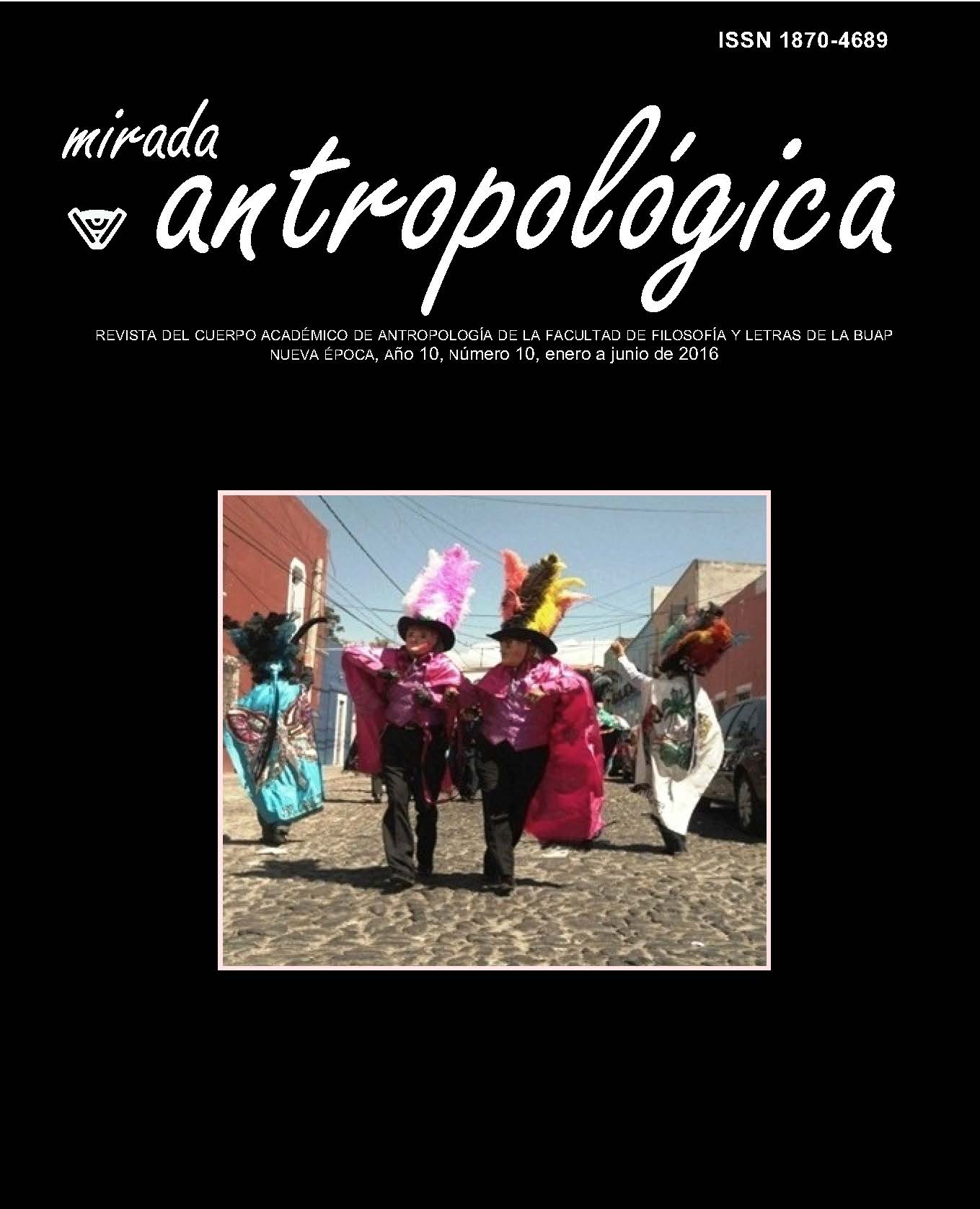
Carnival in the Alto Neighborhood: Sound Construction and Expressions of Identity
Published 2026-08-31

This work is licensed under a Creative Commons Attribution-NonCommercial-NoDerivatives 4.0 International License.
How to Cite
Carnival in the Alto Neighborhood: Sound Construction and Expressions of Identity. (2026). Mirada Antropológica, 10, 41-64. https://doi.org/10.35494/ffyl.ma.29544297e.2016..10.244
Abstract
This paper is the result of field research conducted with the El Alto la 16 and Real del Alto dance troupes. Our main objective was to study the soundscape produced during Carnival. Therefore, our choice of these particular dance troupes was based primarily on the fact that both use musical accompaniment provided by string ensembles. In both cases, the violin stands out as the instrument responsible for carrying the melody.
Downloads
Download data is not yet available.
References
- Blacking, John (2000) How musical is man? Seattle & London: University of Washington Press. (Año de publicación del libro original; 1973).
- Camacho, Gonzalo (2006) “El vuelo de la golondrina. Música y migración en la Huasteca”. En Fernando Híjar Sánchez (coord.) Música sin fronteras. Ensayos sobre migración, música e identidad, México: CONACULTA, Dirección General de Culturas Populares e Indígenas, pp. 251-288.
- Feld, Steven (2012). Sound and Sentiment: Birds, Weeping, Poetics, and Songs in Kaluli Expression, Durham & London: Duke University Press. (Año de publicación del libro original; 1990).
- Frith, Simon (2003). “Musica e identidad”. En Stuart Hall y Paul du Gay (comps.) Cuestiones de identidad cultural, Buenos Aires: Amorrortu Editores, pp. 181-213.
- Lotman, Iuri (1996). La semiosfera I. Semiótica de la Cultura y del texto, Madrid: Cátedra.
- Merriam, Alan P. (1964). The Anthropology of Music, Indiana: Northwestern University Press.
- Ricoeur, Paul (1995). Tiempo y narración I. Configuración del tiempo en el relato histórico, México: Siglo XXI.
- Schafer, R. (1994). The soundscape: our sonic environment and the tuning of the world, USA: Destiny Books. (Año de publicación del libro original; 1977).
- Sloterdijk, Peter (1999). Esferas I: Burbujas, microesferología. Madrid: Ediciones Siruela.
- Vila, Pablo (2000). “Música e identidad. La capacidad interpeladora y narrativa de los sonidos, las letras y las actuaciones musicales”. En Mabel Piccini et al. (coord.) Recepción artística y consumo cultural, México: CONACULTA, INBA, Ediciones Casa Juan Pablos, pp. 331-369.